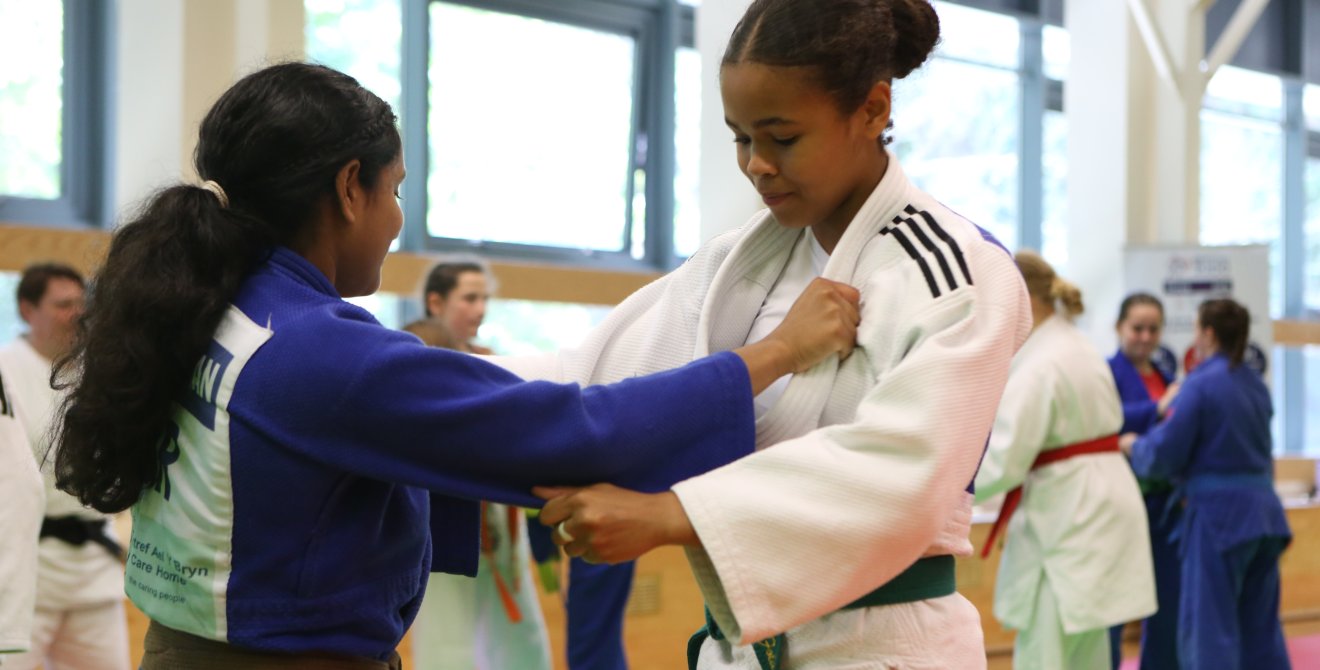
A new approach to weight management is helping young athletes enjoy judo without the pressure to make weight.
The Sport Wales Institute and Welsh Judo are working with British Judo and the other home nations judo bodies to put young athletes’ health, wellbeing and enjoyment of the sport first. The guidance aims to support the growth of young judoka and create a more positive experience of judo.
There were concerns that some young athletes were not eating enough to fuel the demands of training as they tried to make weight for competition.
Spotting a worrying pattern
Weight categories are an important part of judo. But for many young athletes, this creates pressure. They may feel they need to limit how much they eat and drink to lose weight to compete in a certain category.
This can lead to issues such as:
- tiredness
- irritability
- low energy
- underperforming
But it’s not always clear to parents and coaches the reason why the energy levels of young athletes are dropping.
Tom Hughes, Development and Events Manager for Welsh Judo, started to piece things together. He’d already spotted that many juniors struggled to complete training sessions at certain times – but it wasn’t immediately obvious why.
He connected the dots after attending a presentation by the Welsh Institute of Performance Science on low energy availability (LEA).
Tom and his Welsh Judo colleagues compared notes and soon realised there was a pattern. Their athletes lacked energy while trying to make weight for a contest.
They approached Sport Wales and British Judo for support, initially to help athletes in Wales. But it became clear that all the home nations faced the same issue. So, they decided to work together.
When athletes become preoccupied with achieving a target weight, it can increase stress, reduce concentration, undermine confidence, and create an unhealthy relationship with food and their bodies. It can consume a huge amount of mental energy, leaving athletes focused on the scales rather than enjoying Judo, developing their skills, or engaging in other important areas of their lives.
Why the guidance is needed
Through research, identifying patterns and discussions with former athletes, the judo bodies identified several reasons why making weight was affecting young people’s experiences of judo:
- a lack of guidance for coaches, parents and young athletes.
- lower energy levels, making it harder for young judoka to train and compete.
- Impact on a young person’s relationship with food and body image into adulthood.
- an increased risk of injury due to not eating or drinking enough.
- reduced enjoyment of judo and increased the likelihood of young people leaving the sport.
- pressure on young athletes to stay in a current weight category, rather than move up as they grow.
It was clear these issues could have a long-term impact on young judoka’s health and the way they viewed their bodies for many years to come.
Having experienced the challenges of making weight throughout my own judo career, I know first-hand the physical and mental impact it can have on athletes. The new guidance is a positive step forward, helping to promote healthier, safer, and more sustainable practices.
“I hope it gives future generations of judoka the knowledge and support to focus on their development, performance, and long-term wellbeing, rather than feeling pressured into unhealthy weight-cutting methods
So, it was important to tackle all the problems at once.
That’s why the Institute are across every angle of making weight – physical, psychological, and nutritional – so nothing gets missed.
Making weight is not just a nutrition problem to solve. It’s not just a psychology problem to solve. It’s not just a growth and development problem to solve. It will take all of us, together.
Putting young athletes first
The first stage of the project was the launch of weight-management guidance and guidance tree – a decision-making tool for athletes, parents and coaches.
Athletes up to the age of 18 are now encouraged to compete in the weight category they naturally fall into, rather than trying to change their body weight just for competition. They can now focus on training, competing, staying healthy, and enjoying the sport instead.
And the guidance is already making a difference. It’s given clubs a resource to guide difficult conversations. Parents are having open conversations with coaches about how they can support their child’s wellbeing, rather than focusing on specific weight targets.
Above all, it’s allowing young athletes to simply enjoy judo and think about their long-term health. Rather than worrying about making weight for their next contest.
Two young athletes from Swansea are already using the guidance to support their growth.
The guidance has given me the knowledge and support to maintain a high-quality, balanced diet, fit for my fuelling and recovery
It’s taught me to prioritise competing in the weight category where I sit naturally
Improving athlete, coach, and parent education
But creating a positive environment for young athletes to thrive will take more than guidance alone. Coaches, parents, and athletes need the understanding to put it into practice.
That’s why the Sport Wales project team is also prioritising education by:
- developing e-learning covering topics such as nutrition, growth, and development with British Judo.
- supporting communication for athletes and coaches to help difficult conversations happen more easily.
- chatting to parents, athletes, and coaches at Welsh Judo national squad days about fuelling for training and competition.
- creating guidelines on how parents and coaches can support athletes through their natural growth and development.
- adding education about weight management into coaching qualifications with Welsh Judo.
The guidance needs to be put into practice. With parents and coaches educated, young judoka will have the support to grow and compete safely.
Changing the culture within judo
Strict weight management practices and attitudes have long been a part of judo culture. Now we know that these approaches can put unnecessary pressures on young judoka.
Many of the weight management practices we see in judo have been the norm in the sport for years. A lot of former athletes become coaches so some of those practices and behaviours can be passed on.
"That's why this project also needs to work to change the culture around weight-making. If we can do this, young people can focus on enjoying the sport and developing as athletes, rather than being defined by number on the scales.
Some of these opinions that have been common in the sport for many years don’t put young athletes’ wellbeing first. This work aims to change that.
By shifting the culture around making weight, more young people can develop safely and keep enjoying judo for life.
A lifelong love of judo
Success for this project won’t just be measured by numbers or data.
What really matters is that young judoka have the energy to train and compete. They should enjoy judo without worrying about the numbers on the scales. That’s what leads to healthy, strong senior athletes, rather than teenagers dropping out of the sport because they don’t enjoy it.
As Wales’ best judoka compete at the Commonwealth Games in Glasgow, this work highlights the importance of supporting young people to thrive. With enjoyable experiences and positive environments, they could continue in judo until maybe they’re representing Wales on the big stage.
Ultimately, this project isn’t about helping young athletes make weight. It’s about helping them enjoy judo, compete safely and remain in the sport for many years to come.