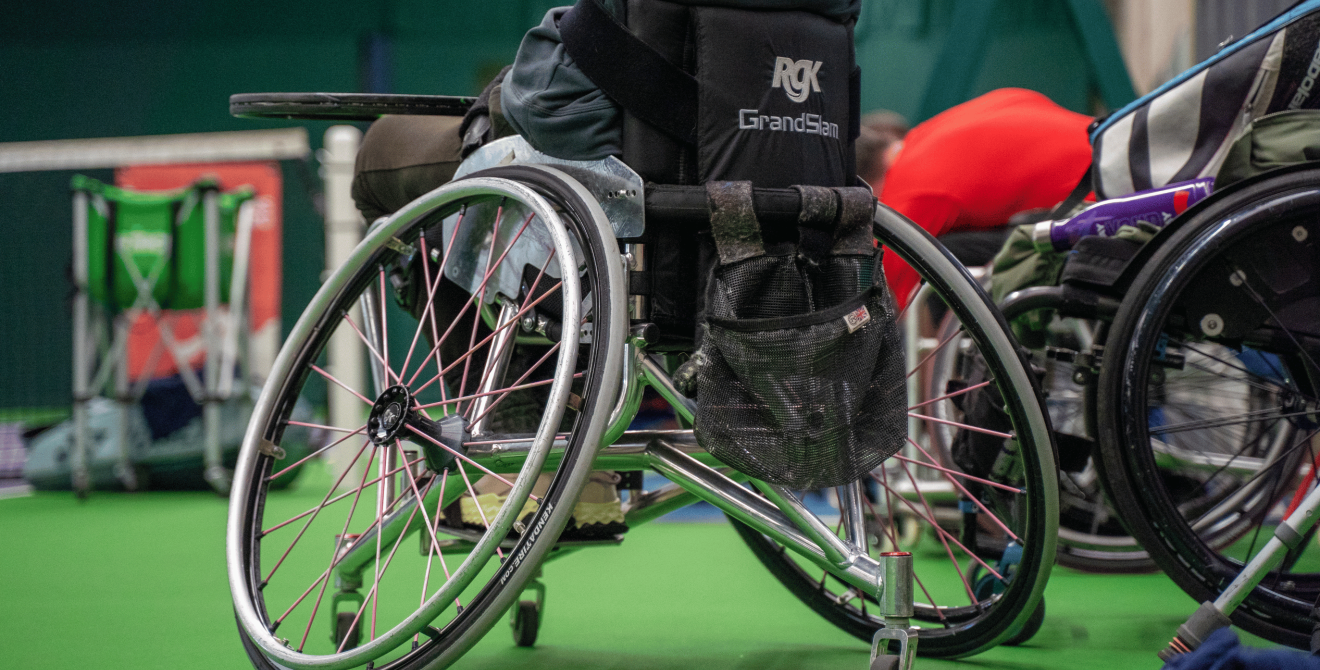
Tennis Wales and Squash Wales are joining forces to deliver a six-week wheelchair racket sport pilot scheme.
The collaboration between two sporting bodies aims to raise awareness of – and participation in – wheelchair racket sports.
Partnering with Rhiwbina Squash and Racketball Club, and Rhiwbina Tennis Club, the pilot will run throughout April and May.
Newcomers and existing players will have access to wheelchair sports in ways that may not have been available to them before. It will give them the chance to try squash and tennis, have fun, keep fit and develop sport-specific skills.
Why collaboration matters
There's a common assumption in sport that governing bodies have to be rivals. And that encouraging someone to try a different sport means losing them to it.
But Tennis Wales and Squash Wales want to challenge that idea.
Both national governing bodies (NGBs) serve a similar audience: wheelchair users and disabled players interested in racket sports. Instead of competing for their attention, the two NGBs are working together to give this demographic the chance to find a sport they like, meet new people, and become more active.
About the pilot
The pilot will bring participants together for weekly sessions, which will include:
- fully supported and guided warm-ups.
- chair movement and skill development drills.
- 90 minutes each of squash and tennis.
The sessions will be well-structured, yet friendly and welcoming. They will emphasise not just sport-specific skills but also community, networking, and enjoyment.
At the end of the six weeks, participants will have the chance to put what they’ve learned to the test in a friendly tournament-style competition.
From there, those who wish to continue playing casually and enjoy the social aspect of squash or tennis can join either club (or both) to keep the fun going.
For players wishing to compete, the pilot will also provide a clear pathway to the Tennis Wales National Championships in August and the Squash Wales Welsh Wheelchair Open in September. The latter of these two major events made history last year as the first wheelchair squash tournament in Wales.
Making squash and tennis more accessible
To give as many people as possible the opportunity to enjoy the excitement of these two sports, the pilot is open to:
- people who are completely new to squash or tennis.
- wheelchair users who have played racket sports before.
- those already active in other wheelchair sports.
- both junior and adult participants.
The focus – especially for juniors or newcomers – won’t be on early specialisation or ‘picking’ a sport. The aim is to create an environment where anyone curious about wheelchair squash or tennis can join in, try both, and find out what suits them.
The pilot is designed to be simple, welcoming, and importantly, repeatable at other squash and tennis clubs around Wales.
A strong focus on coach development
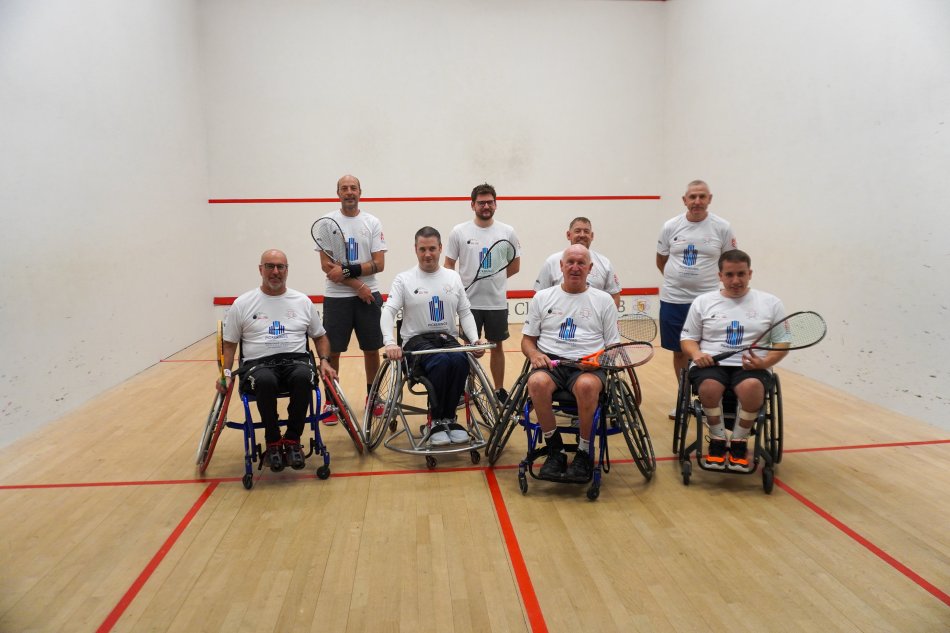
In preparation for the scheme’s launch, coaches from both clubs recently took part in a specialised wheelchair-inclusion training session. This was led by ex-GB national wheelchair sports coach, Mark Bullok, and former international tennis player, Danny Sapsford.
The event provided coaches with a deeper understanding of wheelchair racket sports and practical tools for adapting the game. This will ensure that each session in the pilot is delivered with the knowledge, confidence, and sensitivity needed to benefit the players.
The benefits of the collaboration
This collaborative pilot has been designed so that everyone involved – from first-time players to NGBs – can experience multiple benefits, both now and in the future.
For the NGBs
- Make use of established processes, networks, and logistics of a partner NGB – without starting from scratch.
- Share best practices and resources across both sports.
- Share the workforce and workload to make major projects more achievable.
- Create more opportunities within disability sports for wheelchair users.
- Educate new wheelchair sport coaches and upskill your existing ones.
- Demonstrate a commitment to disability sport.
- Increase awareness and participation in your sport.
- Increase membership at your clubs.
- Identify and develop talent more effectively.
For wheelchair users
- Try two different sports in one venue.
- Learn from experienced coaches across both sports.
- Keep fit and stay active.
- Progress towards national and international competitions.
- Connect with other wheelchair users with shared interests.
- Access opportunities that, for many, haven't existed before.
Entering the disability sport space can be daunting for clubs, but this pilot will show how they can overcome barriers and that providing sport for all can be done.
A defined pathway for every participant
Tennis Wales and Squash Wales developed the pilot to create opportunities for everyone, whether they want to compete or just stay active and socialise. The pilot will also help clubs become more familiar with the player journey by engaging regularly with the NGBs.
Both Rhiwbina clubs already run weekly sessions that the pilot will directly feed into, creating a clear pathway from the initial sessions into club play.
Participants can then progress to regional and national championships, and to representative levels, if they wish. For many, this will be the first time a supported pathway into wheelchair sport has been available at a local level.
From Rhiwbina to the rest of Wales
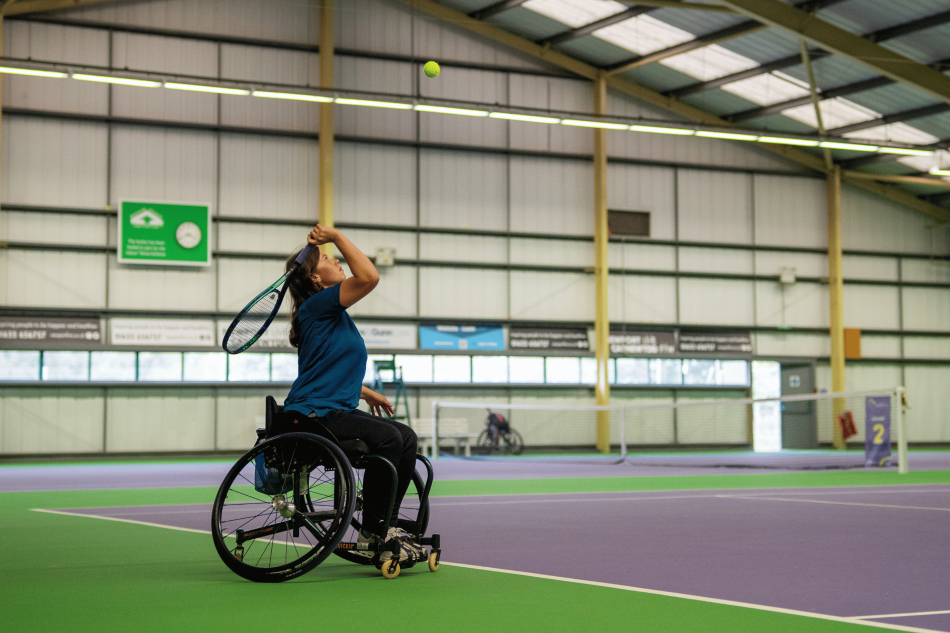
Sustainability and repeatability are at the heart of this pilot: the goal is a straightforward, transferable model that takes root in Rhiwbina and spreads from there.
But this isn't a 'helicopter in, helicopter out' approach. The NGBs are investing in education, coach development, and ongoing support for both clubs. This provides them with the tools to embed wheelchair sport as a long-term part of their participation strategies and create a blueprint for what other clubs can achieve.
And the interest is already clear: other squash and tennis clubs have approached both NGBs. Venues are also keen to introduce the project to their own communities – even before the pilot has started.
From Squash Wales’s point of view, we see this as a long-term cultural shift in what we do, and not just a one-off project.
Community over competition
With vital funding for NGBs being so closely linked to participation figures and data, some organisations might understandably have reservations about exposing their players to another sport.
However, Tennis Wales and Squash Wales remain firm in their stance: this pilot is about participation, not player ownership. It’s an example of collaboration to create more opportunities for both new and existing players, not two sports competing to replace each other.
Both NGBs agree that increasing access to sport for more disabled people is, quite simply, the right thing to do. And that shared belief is what's setting this pilot up for success.
Measuring success
Success means increased involvement in wheelchair tennis and squash among the disabled community in Rhiwbina and the wider area.
To track progress towards that goal, both NGBs will gather data, including:
- attendance figures for juniors and adults.
- attendance figures for new and existing players.
- feedback from players, coaches, parents, and guardians.
- participation and retention figures, including how many participants go on to join regular club sessions after the pilot.
- pathway progression: how many participants move from the pilot into regional activity or national competitions.
- enquiries from clubs looking to replicate the model.
Top tips for other NGBs
Tennis Wales and Squash Wales have some practical, actionable advice for any organisation thinking about working with another:
- Start with your shared values and goals: What do you both want to achieve?
- Don't over-engineer it: Follow the necessary rules and policies, but don't let complicated admin get in the way.
- Focus on the players, not the politics: Keeping participants at the heart of everything leads to smoother delivery and better outcomes.
- Trust each other: You both want the same thing – more people playing more sport – so back each other to make that happen together.
- Focus on the opportunities, not the obstacles: Focus on the reasons you can work together, not the reasons you can't.
- Pool your resources and share best practices: Look at what each organisation does well and learn from each other.
The more NGBs that can work together in harmony and find ways to coexist and do projects like this for the good of both their sports, the better.
Making wheelchair sports a priority
Talent exists everywhere, but opportunity often doesn't. For many wheelchair users, the biggest barrier to engaging in sport isn't ability – it's never having been given the chance. Making racket sports accessible isn't just the right thing to do for athletes: it's fundamental. It’s how both sports will grow, thrive, and make their mark on a national and international stage.
Together, Tennis Wales and Squash Wales hope this pilot will take steps towards wheelchair racket sports becoming the norm – not the niche.
Stories
Keeping you up to date with everything we do and showcasing the breadth of Welsh sport.