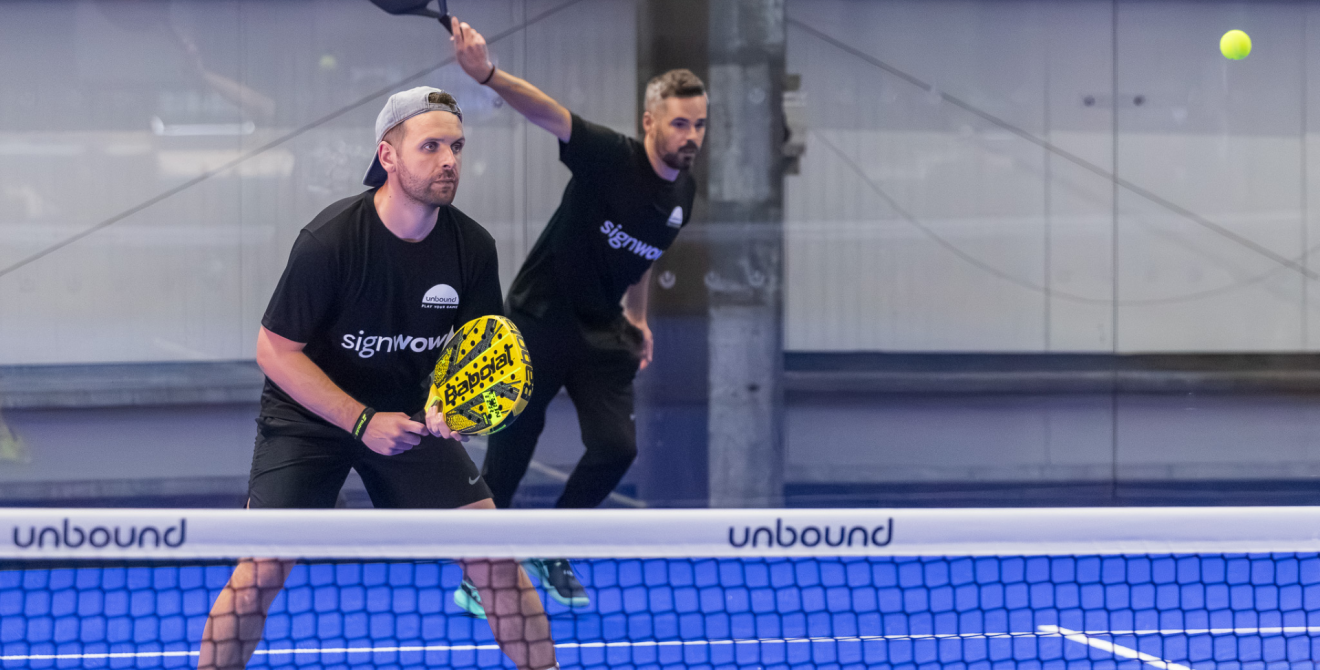
While padel continues to boom, Unbound Padel Club is showing how simple changes can make sure no one is left behind. Now, a growing d/Deaf community comes together every week to play, socialise and feel a part of something.
Unbound, set up by two local entrepreneurs, chose its name because they want to remove barriers for anyone who wants to enjoy the sport.
And it shows. The venue has four indoor wheelchair-friendly courts and a café. But, most important of all, a welcome where d/Deaf players can feel at ease and get stuck in.
Being d/Deaf-friendly matters
In Wales, we want everyone to enjoy sport. But, for many d/Deaf people, going along to a club or a sports class can feel tough.
This is because:
- instructions can be missed
- coaches speak too quickly
- people are unsure how to communicate clearly
- players can feel isolated or excluded from the social side.
By making small changes to communication and coaching, sport clubs can help d/Deaf people take part and enjoy being active.
The impact on the d/Deaf community
Talina has been taking part in the d/Deaf friendly sessions at Unbound and is really enjoying being active in a supportive community:
With other sports, I can be the only deaf person, so communication breaks down. I’m good at sports - padel, football, tennis - but when I finish a match and go straight home, I can feel isolated. There’s nothing social there. But here at padel, it is social plus sport. It is my ‘padel family.
It’s different because here is full community inclusion. For me personally, I have a new activity, new community, new friends, friends I haven’t seen in ages, and I finally see them again and connect. It’s a family! I feel fit and healthy. It’s a new thing for me - my mental health is better. That’s why Padel is the best sport.
Founders with a passion for inclusion
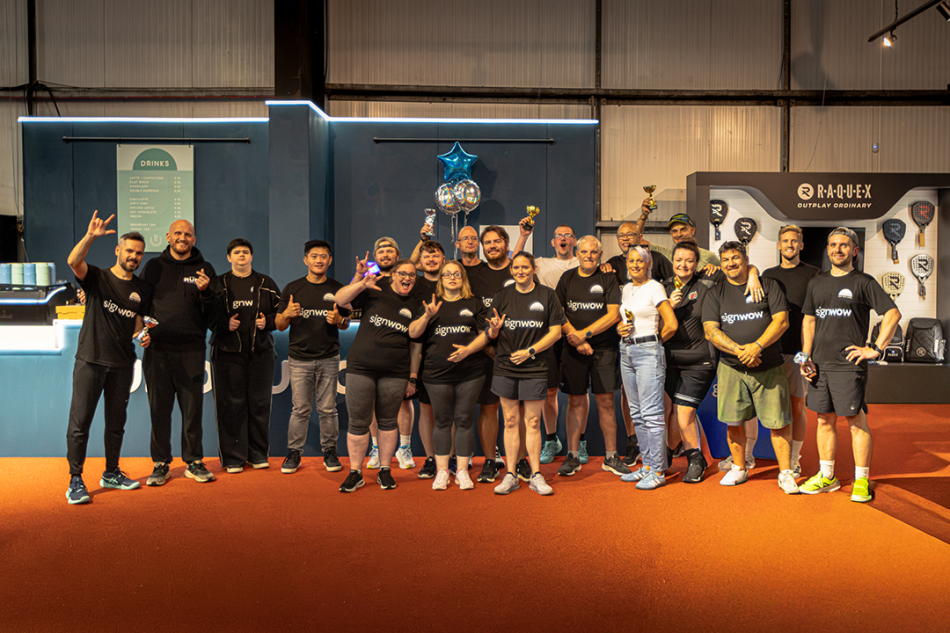
Unbound opened in May 2026. It’s the brainchild of two local founders – Adrian Swinbourne and Daryl Fisher.
The duo is determined to make the venue something the whole community can be a part of:
If we get the community right, everything else follows. That means making Unbound a place where everyone belongs, whether you're playing your first game or competing at the highest level. When people feel genuinely part of what we're building, that's when something real happens.
The pair met with Tennis Wales, who provided advice on inclusive spaces and the support available. They also got in touch with Disability Sport Wales, British Deaf Association and Mark Hester – a key champion of the Deaf sporting community - to outline their ambitious plans and start conversations.
Together, Adrian and Mark approached South Wales Deaf Padel, who immediately felt that Unbound would be a perfect home. And although the venue is still new, it has already become a recreational hub for the d/Deaf community with regular sessions – and it’s growing in momentum.
Adapting sports sessions for the Deaf community
The sessions at Unbound are discounted for South Wales Deaf Padel. They are delivered by a d/Deaf-aware coach, trained in basic British Sign Language (BSL).
Being d/Deaf-aware or friendly means the coach is aware that communication needs to be clear. Some players use BSL while others lipread or can hear if you speak louder and more clearly.
“There aren’t any big adaptations that you need to make to help d/Deaf people come along and enjoy a sport,” says Libby Steele who is Deaf Sport Senior Officer at Disability Sport Wales, who has also worked closely with Unbound and is d/Deaf herself.
“Unless you've got an issue that affects your balance and your coordination, it all comes down to communication, inclusion and the confidence of coaches in being d/Deaf-friendly.”
Tips for sports groups
If you would like to be more inclusive and welcome Deaf people to your sports group, Libby has some top tips:
- Make eye contact with people as you talk to them, and before you start talking or communicating.
- Avoid standing in front of bright light sources so people can see you more easily.
- Check participants understand instructions before they start activities
- Pair new or nervous players with someone more confident.
- Learn a few simple BSL greetings to welcome people.
“If a coach can use just a little bit of BSL or can be inclusive by just saying, "Hello, how are you? Welcome, come in,” people feel more at ease and are more willing to return,” says Libby.
“Deaf people want to get involved in sport. But often they go to a club and they have no one to talk to, so it becomes a place of feeling vulnerable rather than a place of safety.”
Stuart Baker, Tennis Wales’ National Development Manager, agrees:
It’s fantastic to see the progress that Unbound is making and we’d love to see more clubs and groups running inclusive sessions. We want to see more disabled people on tennis and padel courts so come and have a chat with us. We can provide advice, connect partners and explain the funding streams available.
Getting started
If you'd like to explore how to make your sport more inclusive, clubs and groups are urged to:
- speak to your governing body about training and funding
- contact Disability Sport Wales for help, promotion and support
- use the Trilingual Coaching Resource to improve how coaches communicate with BSL speakers.
Unbound made the most of support from others. The LTA and Tennis Wales runs courses for coaches to support d/Deaf players. Open Court funding also supports tennis venues, like Unbound, to deliver sessions for disabled people.
Looking ahead
Padel is booming across Wales and the UK. But the team behind Unbound – together with its mix of partner organisations - has shown that any sport can be inclusive without the need for major change.
By listening to people, making them feel welcome and getting to know them as individuals, more people can enjoy the benefits of sport.