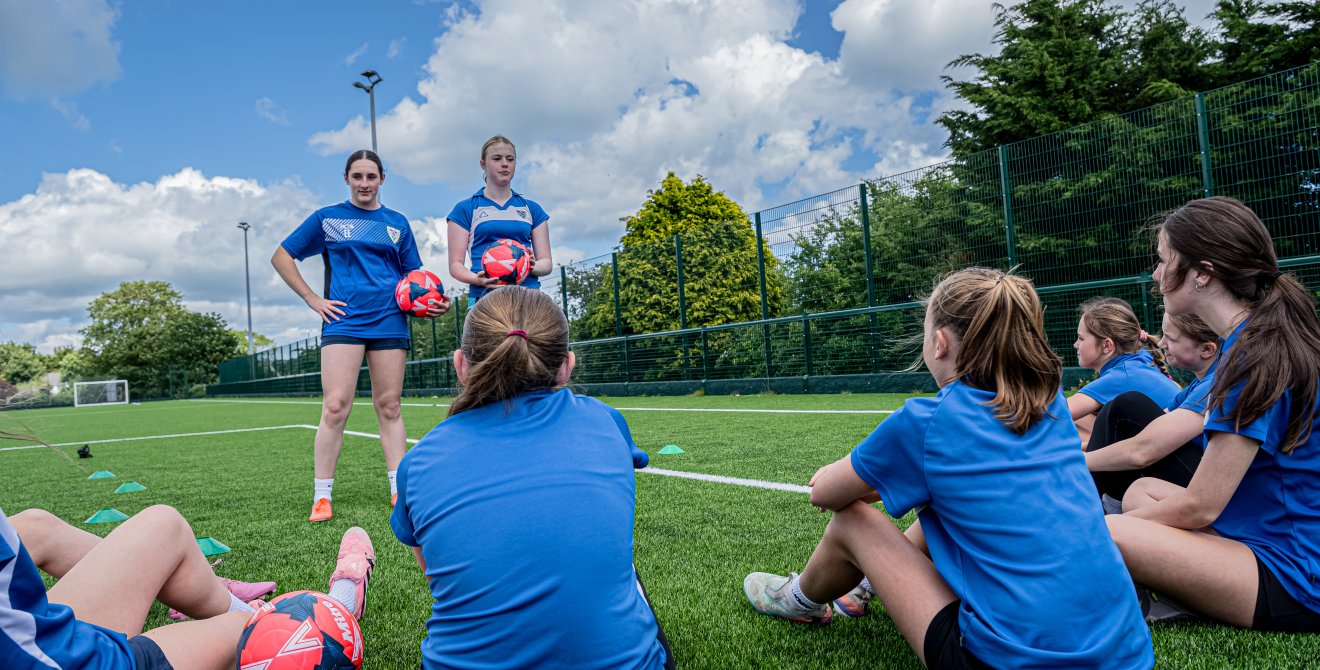
A free online guide is helping coaches to give better support to girls through puberty.
Research shows that nearly one in four women in the UK and Ireland took part in less sport and exercise because of puberty or their menstrual cycle.
Coaches, particularly men, may have little knowledge of female puberty. Or they can feel uncomfortable with discussing topics such as periods and menstrual health.
That’s why the Sport Wales Institute created the “Coaching girls through puberty” guide with UK Coaching. The aim is to give coaches the knowledge and confidence to have conversations, make small changes and improve girls’ experience of sport during puberty.
Puberty should not be a reason for girls to stop enjoying sport.
Puberty in sport
Puberty is a normal part of every young athlete’s life. But for girls, the physical, emotional and social changes can create new barriers to taking part.
During puberty, girls may be:
- starting their period, and managing symptoms whilst training
- experiencing changes in body shape, including height and breast development
- feeling less confident and having conflicting emotions
- seeing changes in their sporting performance and recovery
These experiences can affect their enjoyment and how comfortable they feel in training and competition. But without the right support, some girls may lose interest in sport.
The Welsh Institute of Performance Science (WIPS) carried out research with other organisations from the UK and Ireland. Research found that:
- almost four in ten women become less active during their teenage years
- nearly one in three said embarrassment or a lack of confidence affected their participation
- around one in seven said sports kit felt uncomfortable or made them feel self-conscious
Coaches play such an important role. How they respond during puberty can influence whether girls feel safe, supported and want to continue taking part.
Learning from others in Welsh sport
Coaches and organisations from across Welsh sport worked alongside the Institute team to create the guide that will be used across the UK.
The guide includes stories from:
They share the ways coaches and organisations are adapting to create more comfortable environments for girls going through puberty.
Welsh Judo
For Steph Walker, the Participation and Performance Coordinator at Welsh Judo, the importance of this guide comes from personal experience.
She has been taking part in judo since she was five years old and has experienced firsthand the difficulties young girls face during puberty.
Coaching the person, not the athlete
What she remembers most is the coaches she worked with, and how being able to have conversations about puberty and periods made training easier:
Growing up, I navigated a lot of these issues on my own. There was one male coach at the time that I was really close to and felt like I could talk to about anything. But then I was also part of the national squad where I didn't know the coach as well. So having those conversations was more difficult.
“It’s really important that young girls have that person that they feel comfortable with and can talk to. It's about not just coaching an athlete; it's about coaching the person.
Don’t make things a big deal
And sometimes it’s as simple as saying nothing at all. In judo, there are two different colour gis (judo uniform). One is white and one is blue. But unknowingly, wearing a white gi can be the difference between taking part or staying home for a girl who is menstruating.
Some coaches really like their clubs to wear traditional white gis when training. But if a female really wants to wear their blue one, let’s make that normal. I’ll maybe wear my blue gi or wear a pair of leggings underneath.
“Some girls may need to go to the toilet during training when they’re menstruating. If she does walk off the mat, then just think there may be a reason behind it. Don’t go shouting and barking at them. Have those open conversations and build that relationship where women and girls can feel confident talking about it.
“Let’s incorporate these little things without making it a big drama.
Create female-only spaces
When girls start their period and their bodies start changing, the grappling and close contact of judo can become a real barrier. Especially if they’re training with boys.
This inspired Girls that Judo – a female only space where girls can take part and feel comfortable.
Girls that Judo offers:
- women and girls-only sessions
- opportunities to hear from female role models and share experiences openly
- support around periods, sports bras and training
- guidance on nutrition and recovery
But it’s not just for women to coach. Steph understands the importance of getting male coaches involved, too:
A key part for us was to try and get male coaches in the room because in judo we can't ignore the fact that a male is going to be part of a female's journey somewhere along the way. So, a lot of it we've been doing is how does a female track their cycle and how coaches and athletes can communicate with each other.
“Just creating that safe space where, even if you are a male, we can talk openly about what we should have in our dojos, like period products.
Swim Wales
Not making things a big drama is what Graham Wardell has been doing for more than 40 years.
Have human conversations
Graham is the National High Performance Coach at Swim Wales. He has been having open conversations to support athletes training and competing during puberty.
I don't need to know the exact science of what's happening, but what I need to know is: how's my athlete feeling?
"If you have those conversations before problems start, you can plan for them, you can help each other through that journey.
Conversations about puberty and the menstrual cycle don’t always have to focus on challenges.
Understanding the athlete
Every athlete has different experiences. Whether that’s during puberty or not. Understanding athletes as people with different lives and experiences can help coaches adapt to their needs and know when they’re not feeling at their best.
Graham has taken this approach with female swimmers and makes sure to encourage and support them, telling them:
Some weeks you might not feel your best but at some times in the month, it's a superpower. Your performance is going to be off the scale.
Supporting coaches to create better environments
Built with coaches in Welsh sport, the ‘coaching girls through puberty’ guide covers topics such as:
- the menstrual cycle
- growth spurts
- breast health and sports bras
- injury and recovery
- Relative Energy Deficiency in Sport (REDs)
It also encourages coaches to make simple changes that can improve girls' experiences of sport, such as:
- making period products available at training sessions
- allowing athletes to take toilet breaks whenever needed
- creating opportunities for open conversations
- giving athletes flexibility around kit and clothing
- encouraging older female athletes to support the younger ones
Matt Craythorne, Strength and Conditioning Coach at Sport Wales, said:
We didn't create this guide to turn coaches into experts in female puberty. We created it to help them feel confident having conversations, making small adjustments and supporting girls through a stage of life that can have a huge impact on their relationship with sport.
Helping more girls enjoy sport
Steph and Graham’s experiences capture what the guide is all about and what it aims to teach: create safe environments, have conversations and get to know the person. Knowing this can be just as important as having technical coaching knowledge
By helping coaches understand the experiences of girls and giving them practical tools to offer support, the guide aims to create more positive sporting experiences during puberty and beyond.
When girls feel comfortable and understood, they are more likely to continue enjoying sport, feeling confident and staying active through their lives.
"Coaching girls through puberty" guide
Explore the free guide to learn more about supporting female athletes through puberty.